Treatment · Riyadh
Crowns and bridges in Riyadh
Crowns restore teeth that are broken, heavily filled or root-canal treated. Bridges replace missing teeth by attaching to the teeth next to the gap.
Dental crowns
A crown covers the whole visible part of a tooth to protect and strengthen it. Crowns are often recommended after a root canal, for a cracked or heavily filled tooth, or to improve the shape of a worn tooth. Common materials include zirconia, lithium disilicate (e.max) and porcelain fused to metal; the choice depends on the tooth's position, your bite and the color of the underlying tooth.
Dental bridges
A conventional bridge replaces a missing tooth with a false tooth held by crowns on the neighboring teeth. A Maryland bridge (resin-bonded bridge) instead uses a thin wing bonded to the back of a neighboring tooth, so little or no tooth structure is removed. Where it fits, it is a conservative alternative to an implant or a conventional bridge, especially for front teeth.
How treatment works
- Assessment. Examination and X-rays to check the tooth, its root and the gums.
- Preparation. The tooth is shaped as conservatively as the material allows.
- Digital scan. An intraoral scanner records the teeth instead of traditional impression trays.
- Provisional. A temporary crown or bridge protects the tooth while the final one is made.
- Fitting. Fit, bite and shade are checked before the final restoration is cemented or bonded.
Dr. Almalki's approach
Dr. Almalki's research covers CAD/CAM restorative materials and digital scanning accuracy, which informs material choice and fit for each crown or bridge.
Clinical cases
Selected cases
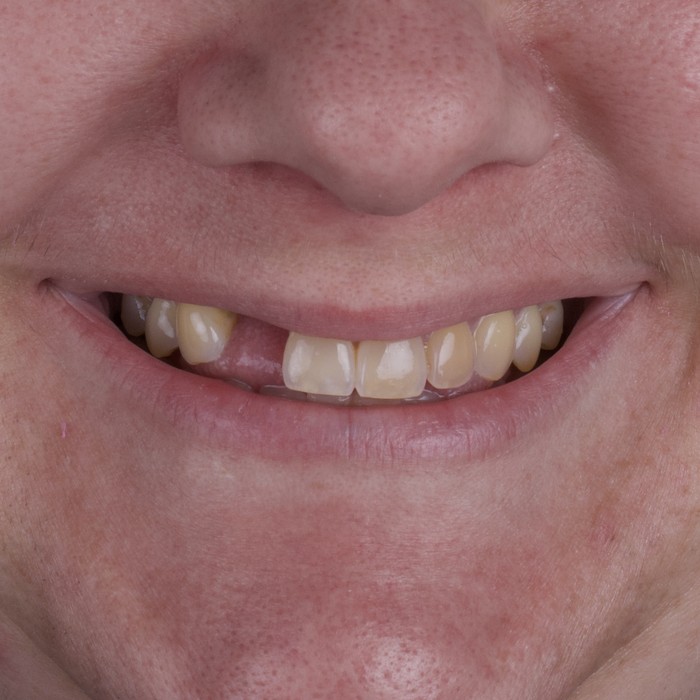
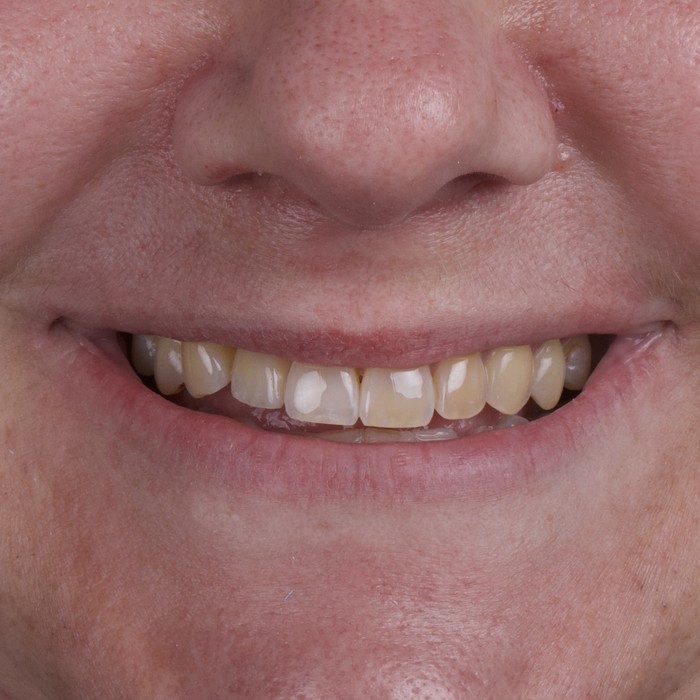
Maryland Bridge — Conservative Anterior Restoration
A resin-bonded Maryland bridge replacing a missing front tooth without cutting down the adjacent teeth — a minimally invasive alternative to an implant or conventional bridge.
FAQ
Common questions
A Maryland bridge replaces a missing tooth using a wing bonded to the back of neighboring teeth, without grinding them down. A traditional bridge requires shaping the adjacent teeth to hold crowns — more effective in some cases, but the Maryland approach is more conservative where it fits.
A veneer covers just the front surface of a tooth to improve shape or color, preserving more natural tooth structure. A crown covers the entire tooth and is used when more strength or coverage is needed.
Brush and floss as you would natural teeth (a water flosser or interdental brush helps around implants), keep up with regular checkups and cleanings, and avoid excessive force like chewing ice or very hard foods.
There is no single best material. Zirconia is very strong and suits back teeth and people who grind. Lithium disilicate (e.max) offers high translucency for front teeth. The choice depends on the tooth's position, the bite and the color of the tooth underneath.
Other treatments
Related treatments
Full-arch implants
Fixed teeth on implants for one or both jaws, including same-day provisional teeth when suitable.
Learn more →Dental implants
Single and multiple implants with digitally guided surgery, restored with natural-looking crowns.
Learn more →Veneers & smile design
Conservative porcelain veneers and smile design to refine tooth shape, color and proportions.
Learn more →Dentures & overdentures
Complete and partial dentures, and overdentures that clip onto implants for a secure fit.
Learn more →Get in touch
Questions, referrals, or collaboration
Follow